Stories of Watershed Impact | 2025
May 2026
Last year was a landmark year for 30 Mile. After several years of planning, we opened our new home base in Mount Vernon Village. Our summer open house, Lake Association Leadership Roundtable, and holiday open house all drew strong community participation and reminded us what’s possible when we have a permanent place to bring people together. We’re grateful to everyone who joined us, and we’re excited to build on that momentum with more events and volunteer training opportunities this summer. Phase II design plans are now complete, and we look forward to sharing what comes next.
The work itself has never been more urgent, or more expansive. Our watershed is facing serious challenges on multiple fronts: two water bodies now infested with aquatic invasive plants, Androscoggin Lake suffering from severe algal blooms, and our towns under growing pressure to upgrade road infrastructure to withstand increasingly severe storms. In response, our team has grown, because the needs have grown, and because we believe this watershed deserves a strong organization ready to meet this moment.
What gives us confidence is you: the individuals, lake associations, towns, and road associations who show up to help us protect the waters you love. At a time when so much feels uncertain, the work happening right here reminds us that meaningful change is possible, and that it starts close to home.
Thank you for your continued support. We have much to be proud of, and even more within reach.
With appreciation,
Shop our Online Store
Visit our new online store, here. All proceeds directly support 30 Mile’s work across the watershed.
Sign up for our Monthly Newsletter
Receive our newsletter – Watershed Roundup – in your inbox each month to stay up-to-date on Watershed news and events all year long. Join today!
30 Mile Taking Action
Our programs promote long-term, sustainable change. We directly protect and monitor lake health, assess and work to reduce land use impacts, and provide educational and recreational opportunities to foster stewardship.
Protecting the watershed from aquatic invasive species
Our Aquatic Invasive Species (AIS) program takes a comprehensive approach to addressing invasives through prevention, early detection, and management…read more
Addressing algal blooms on Androscoggin Lake
In 2025, Androscoggin Lake suffered its fourth lake-wide algal bloom in five years, and its first harmful algal bloom…read more
Connecting community through stewardship
By bringing people together through our educational and recreational opportunities, we actively engage them in protecting our lakes and amplify our impact…read more

Managing invasives: Androscoggin to Tilton
During our 5th season fighting variable-leaf milfoil in Androscoggin Lake, we worked with the lake’s volunteer team to complete a thorough, lake-wide survey…read more
Reducing soil pollution for cleaner lakes
As development increases across the watershed, so do the impacts of stormwater moving more quickly across the landscape, carrying sediment and phosphorus to our lakes…read more
Standing up for lake health
Since our inception in 2009, an important part of our work has been advocating for lake-related legislation in Augusta. In 2025, we helped co-found the Lake Protection Coalition…read more
10th season monitoring lake health
From May to October, we collect vital data on water clarity, temperature, dissolved oxygen, phosphorus, and more to better understand and protect these ecosystems…read more
Technical support for towns
Our technical support extends to the municipalities in our watershed. In Vienna, repeated storm damage and road washouts prompted us to secure two grants for the town…read more
Watershed Roundup
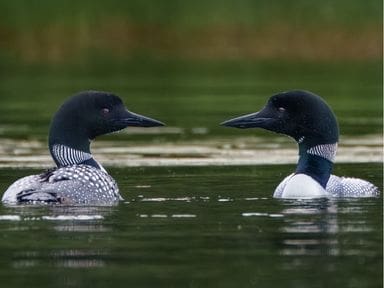
Through our monthly e-newsletter, and our Facebook and Instagram pages, we inform and educate the public about lake protection and promote opportunities for community involvement. Sign up at 30mileriver.org/newsletter.
Protecting the watershed from aquatic invasive species
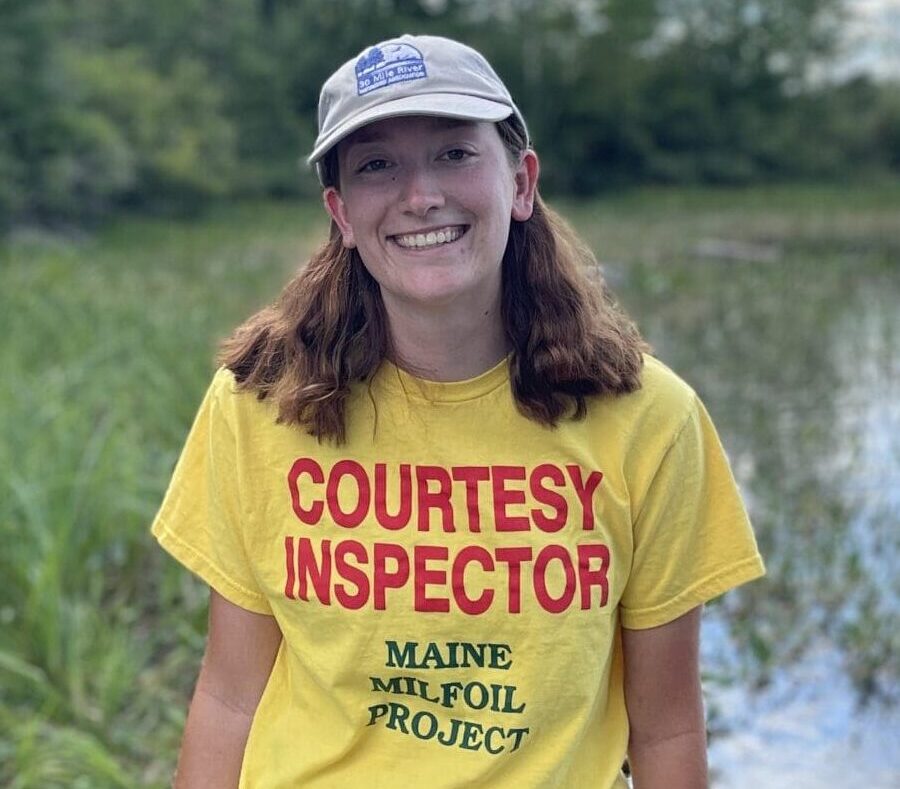
Our Aquatic Invasive Species (AIS) program takes a comprehensive approach to addressing invasives through prevention, early detection, and management. Courtesy Boat Inspectors (CBIs) are the “first line of defense,” preventing the spread of invasives via watercraft by thoroughly inspecting boats and trailers, and educating boaters about the threat of AIS. In 2025, our eight paid staff and 43 volunteer CBIs completed 3,976 inspections.
Annual plant surveys are critical to finding new infestations of invasives quickly, increasing chances of eradication and mitigating ecological, economic, and recreational impacts. In 2025, 132+ volunteers surveyed 400+ hours across 11 lakes and ponds in the watershed in search of AIS. 30 Mile staff provided key support to volunteers, including plant identification expertise, training opportunities, and survey assistance.
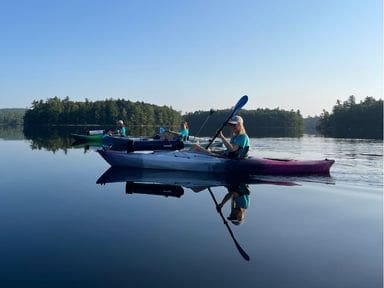
Our survey team setting off to survey David Pond on a morning in August.
Managing invasives: Androscoggin to Tilton
During our 5th season fighting variable-leaf milfoil in Androscoggin Lake, we worked with the lake’s volunteer team to complete a thorough, lake-wide survey, finding no suspicious plants in any areas outside of the one cove where milfoil has been found. In addition to controlling the infestation by hand-removing milfoil plants, we deployed multiple benthic barriers—tarp-like mats that smother plants by blocking sunlight and preventing photosynthesis. Over the season, our staff spent more than 550 hours surveying the infested area for invasive milfoil plants, finding fewer than in previous years. Due to our work over the past five years, we have successfully prevented this infestation from spreading to other parts of the lake.
We are committed to preventing the spread of swollen bladderwort from Tilton Pond, at the top of our watershed, and to implementing solutions that effectively manage and reduce this invasive’s impact on the pond. In 2025, our staff completed two full surveys of David Pond (just below Tilton) and maintained four large nets to catch fragments flowing downstream.
We work closely with the Maine DEP to implement best management practices to effectively manage both infestations.
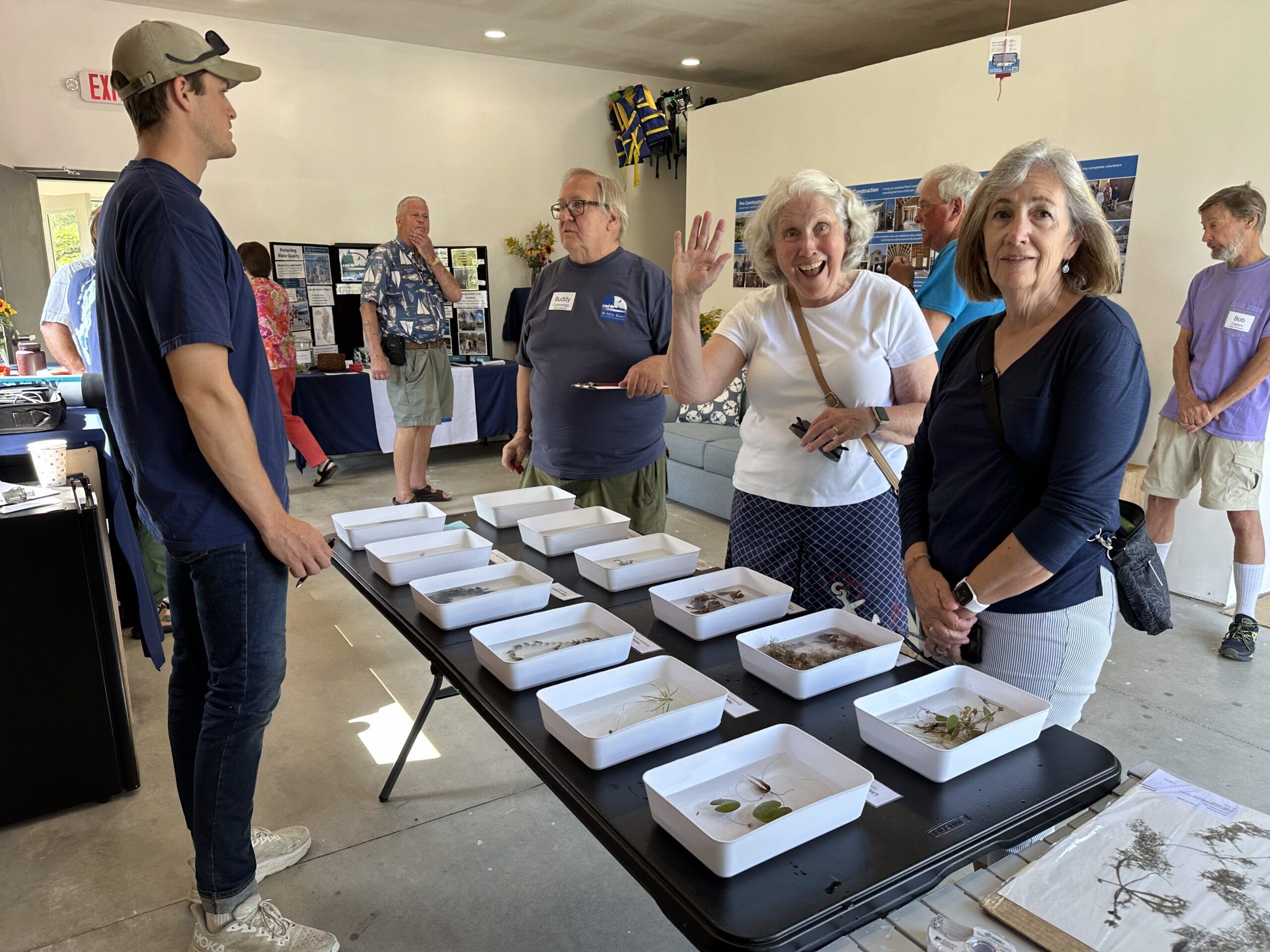
Invasive plant identification workshop at Camp Bearnstow on Parker Pond
10th season monitoring lake health
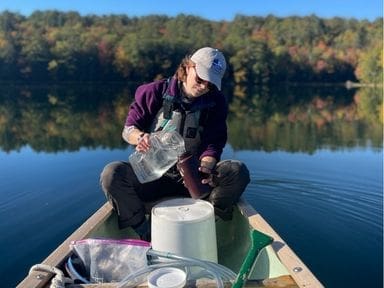
From May to October, we collect vital data on water clarity, temperature, dissolved oxygen, phosphorus, and more to better understand and protect these ecosystems. This growing historical dataset enables us to identify long-term trends, assess risk, and be prepared to take action. In 2025, our staff worked alongside 35 dedicated volunteers to monitor and track the health of 13 lakes and ponds.
Welcome Sara York
Water Quality Specialist
Sara joined our team in April 2025 as our Water Quality Specialist. Sara oversees monitoring of the watershed’s lakes and ponds, data collection, training volunteers, assisting landowners with lake-friendly practices, and the work on Androscoggin Lake related to the algal blooms.
Addressing algal blooms on Androscoggin Lake
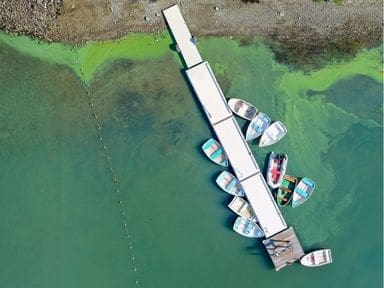
In 2025, Androscoggin Lake suffered its fourth lake-wide algal bloom in five years, and its first harmful algal bloom (HAB), with water clarity dropping below 1 meter (3.3 feet). In response, we completed intensified monitoring for a fourth consecutive season, gathering critical data to better understand these events. We also hosted a public forum, formed a steering committee, and made plans to hire lake science experts and engineers to investigate the blooms’ underlying causes and evaluate solutions to prevent future algal blooms.
True color photo of Androscoggin Lake at the Yacht Club, Sept 2025, PC Josh Robbins
Reducing soil pollution for cleaner lakes
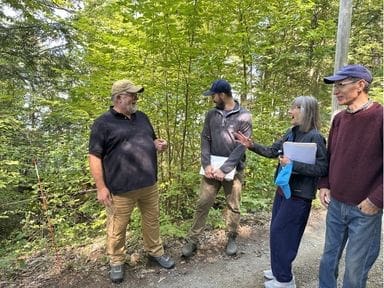
As development increases across the watershed, so do the impacts of stormwater moving more quickly across the landscape, carrying sediment and phosphorus to our lakes. Reducing soil erosion is essential to protecting water quality and preventing algal blooms. To support this work, we are managing two multi-year Section 319 Clean Water Act grants, administered by Maine DEP in partnership with EPA. In 2025, these grants provided funding and technical assistance needed to address twelve priority erosion sites around Parker Pond and Androscoggin Lake, primarily on roads.
We also provided technical support to lakefront homeowners. As a regional LakeSmart HUB, we supported five volunteer lake teams and conducted 21 LakeSmart evaluations in 2025. These free visits provide tailored recommendations to help landowners manage their properties to protect water quality. Additionally, our live stakes program helped landowners plant nearly 500 live stakes. These woody shrub cuttings root quickly to stabilize eroding shorelines and offer a simple, low‑cost, and effective way to build healthier buffers!
Technical support for towns
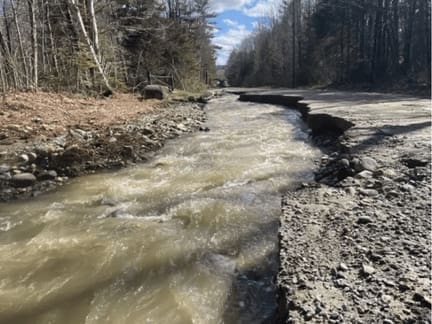
Our technical support extends to the municipalities in our watershed. In Vienna, repeated storm damage and road washouts prompted us to secure two grants for the town. These funds provided the opportunity to complete the engineered design improvements needed for four high‑risk roads: Kimball Pond, Jesse Ladd, Tower, and Trask. The Tower Road project is expected to be completed in 2026 with assistance from our Parker Pond 319 grant (see Reducing soil pollution for cleaner lakes).
Welcome Gabrielle ‘Ellie’ Hatt
Land Use Coordinator
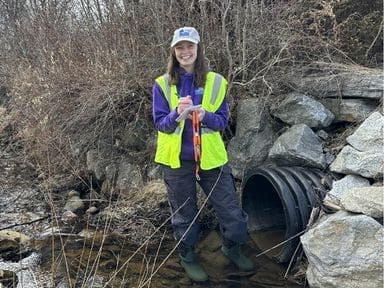
Ellie joined our team in December as Land Use Coordinator. She implements programs and activities related to erosion prevention and control. These include conducting watershed surveys; providing technical assistance to landowners, road associations, and towns; and managing grants for watershed protection.
Connecting community through stewardship
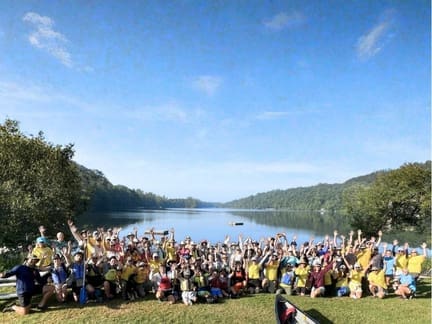
By bringing people together through our educational and recreational opportunities, we actively engage them in protecting our lakes and amplify our impact. Our hands-on programs and events increase knowledge, strengthen skills, and build community collaboration for lake health. Examples from 2025 include hosting and co-hosting plant identification workshops to strengthen skills that are a key part of prevention and early detection; bringing new and experienced volunteer water quality monitors together on Echo Lake for certification by Lake Stewards of Maine; and co-hosting a “Septic Social” for Androscoggin Lake residents to learn about septic system care and its impact on water quality. Throughout the year, we had a strong presence at town events, such as the Wayne Strawberry Festival. These opportunities allowed us to connect with community members, share our mission, and encourage involvement in protecting the watershed. We also began using our new space in Mt. Vernon to host public events, including two open houses and our first annual Lake Association Leadership Roundtable (see back page).
Photo: Our 16th annual Paddle Trek held on July 26th was our biggest ever, with 70 paddlers and over 30 volunteers!
Standing up for lake health
Since our inception in 2009, an important part of our work has been advocating for lake-related legislation in Augusta. In 2025, we helped co-found the Lake Protection Coalition, a collection of organizations, supported by individuals and businesses, who united to advance innovative, effective, science-based policy change, including long-term funding for sustaining healthy lakes in Maine.
In 2025, we supported four successful bills aimed to regulate floating structures, improve septic system regulations, prevent revenue loss from reduced registration requirements for small motorized boats, and enhance aquatic invasive species protections.
How can you make a difference?
Our first year in our new home in Mt. Vernon
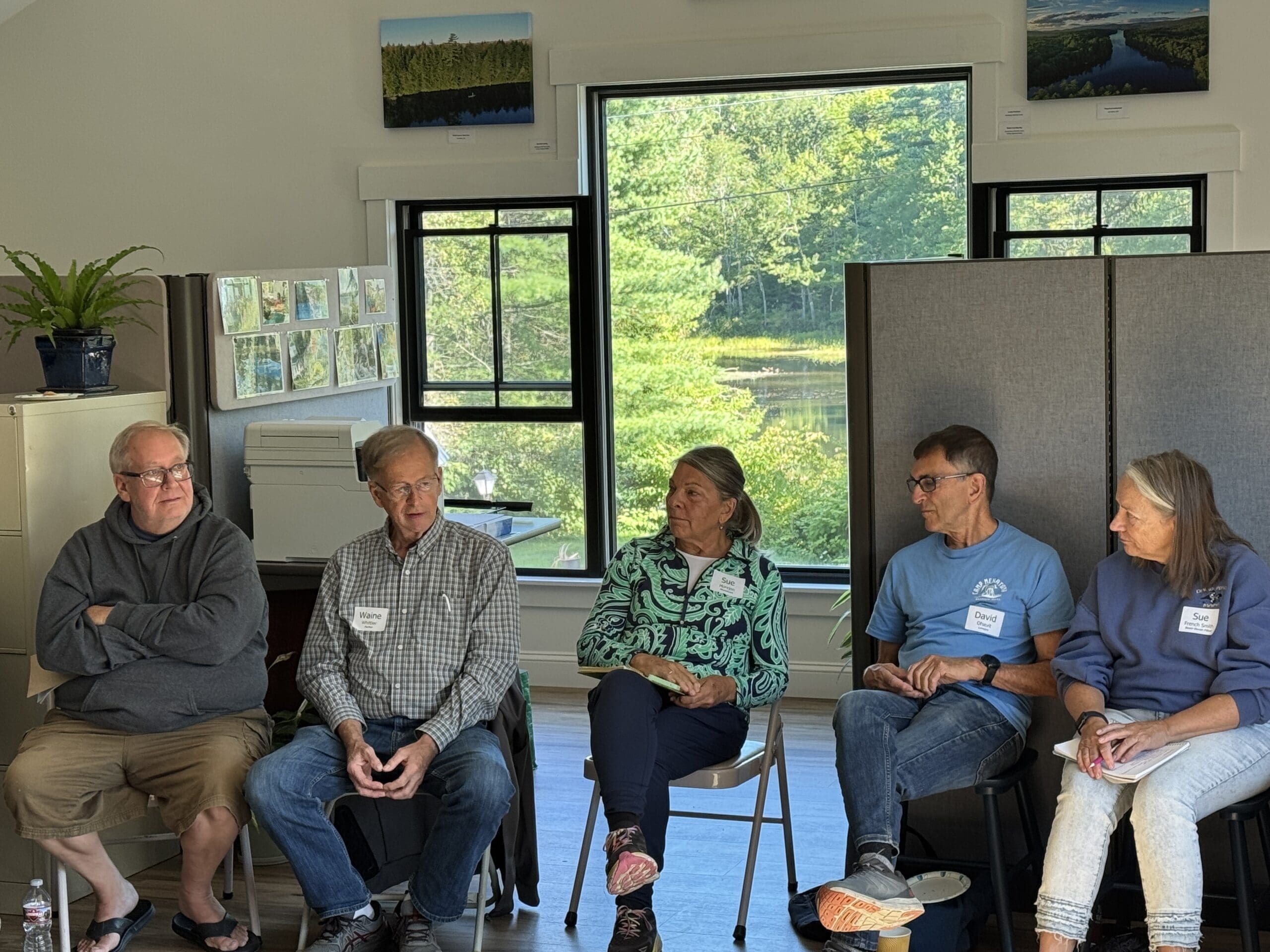
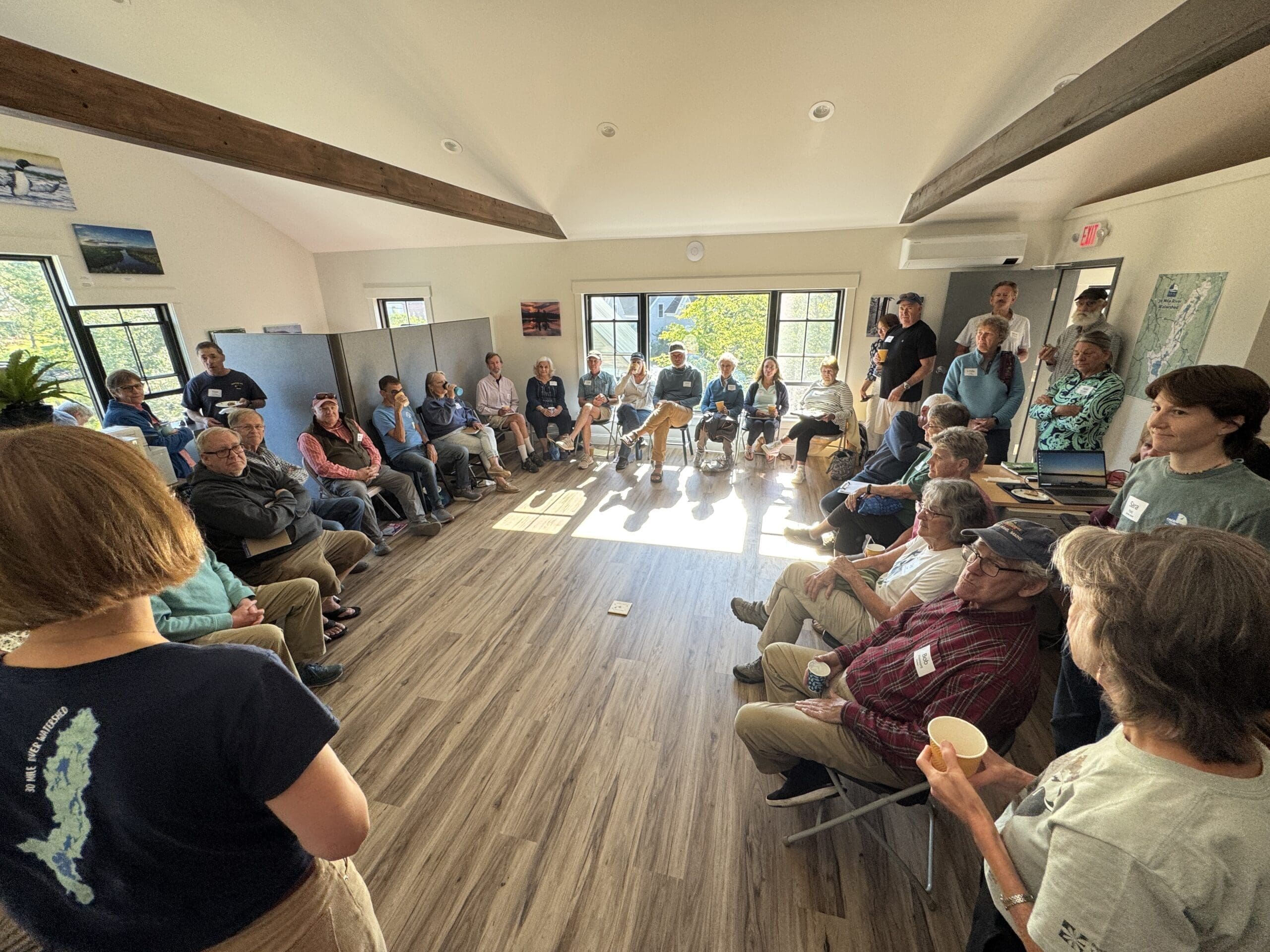
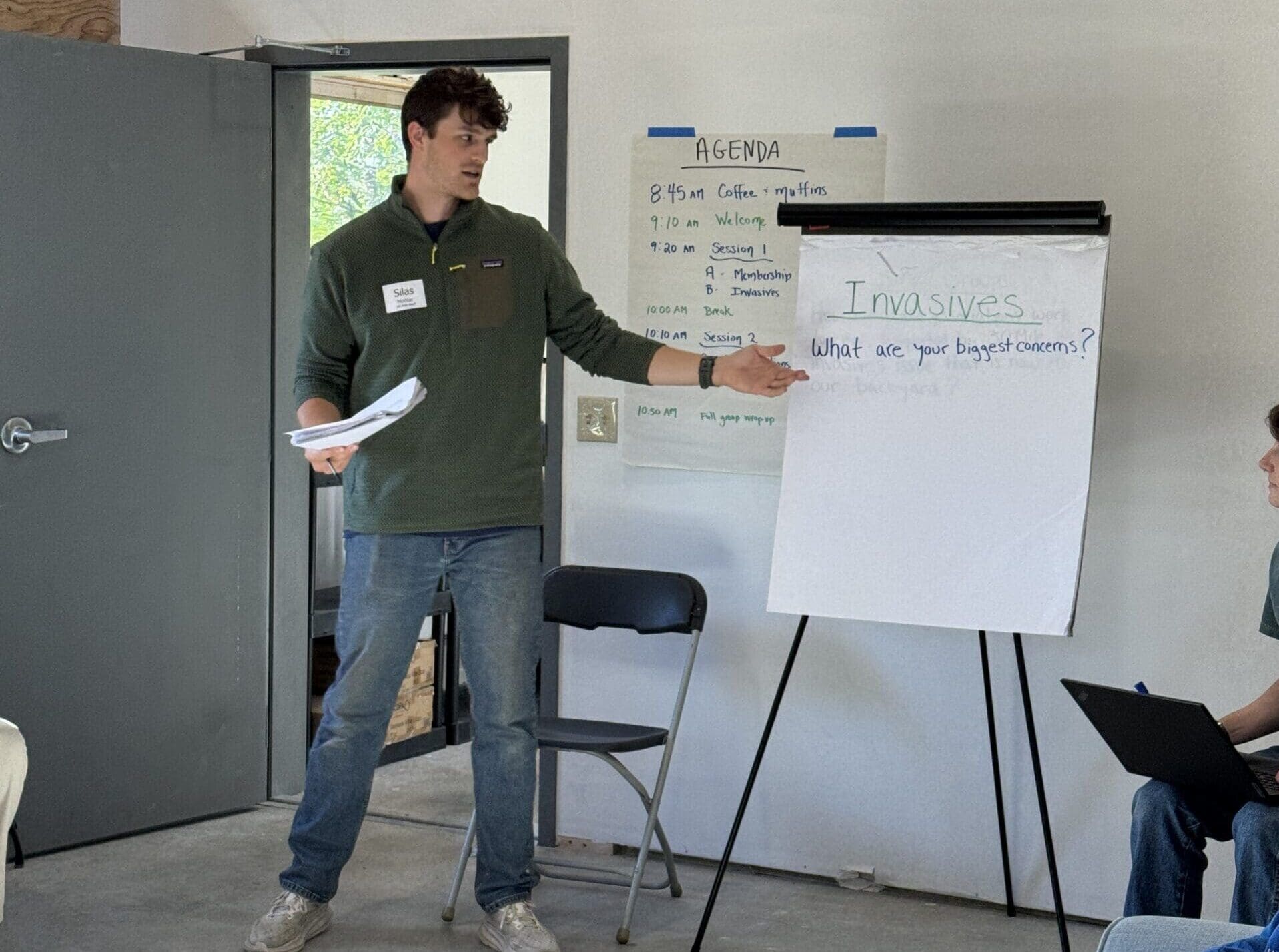
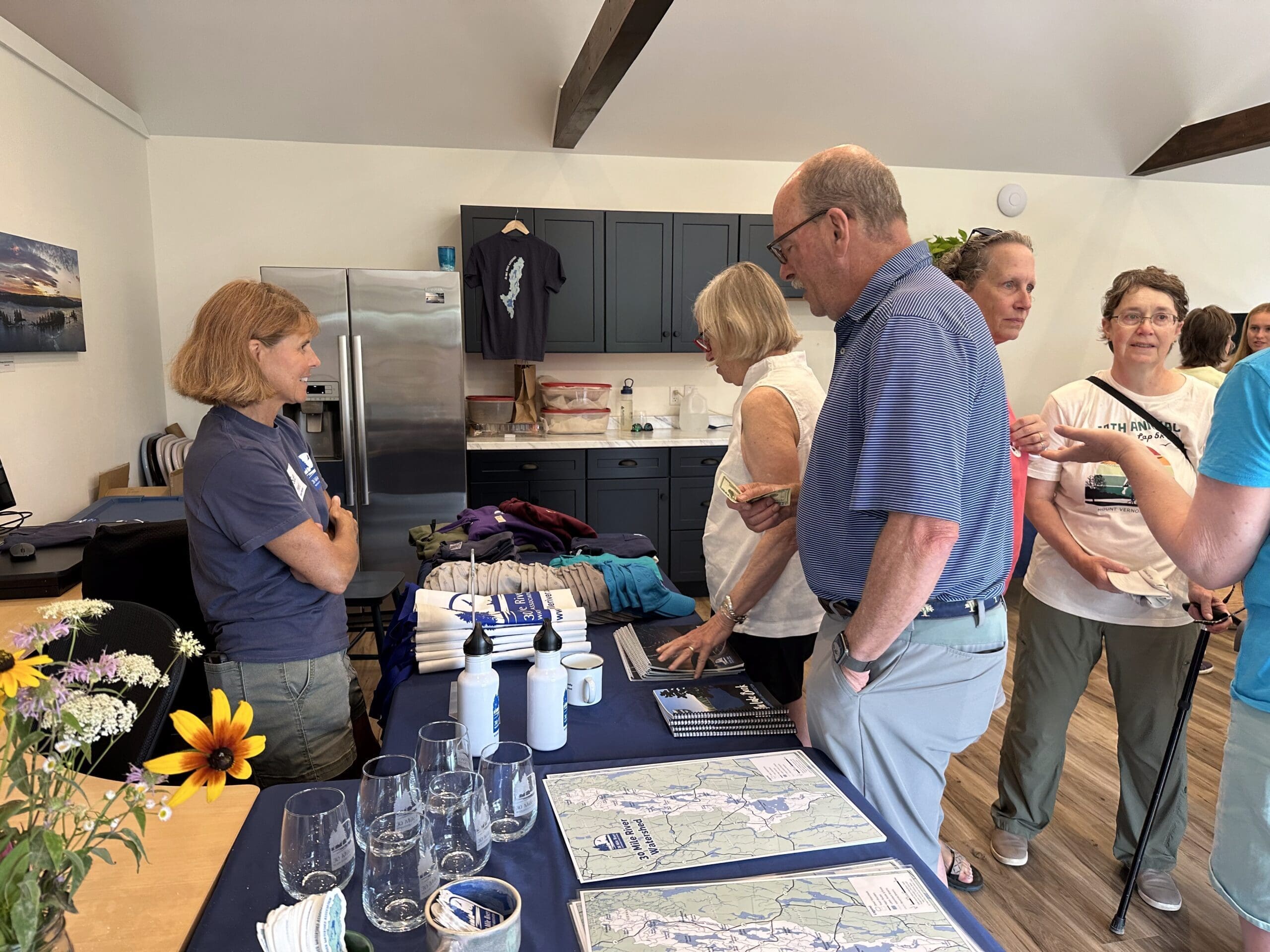
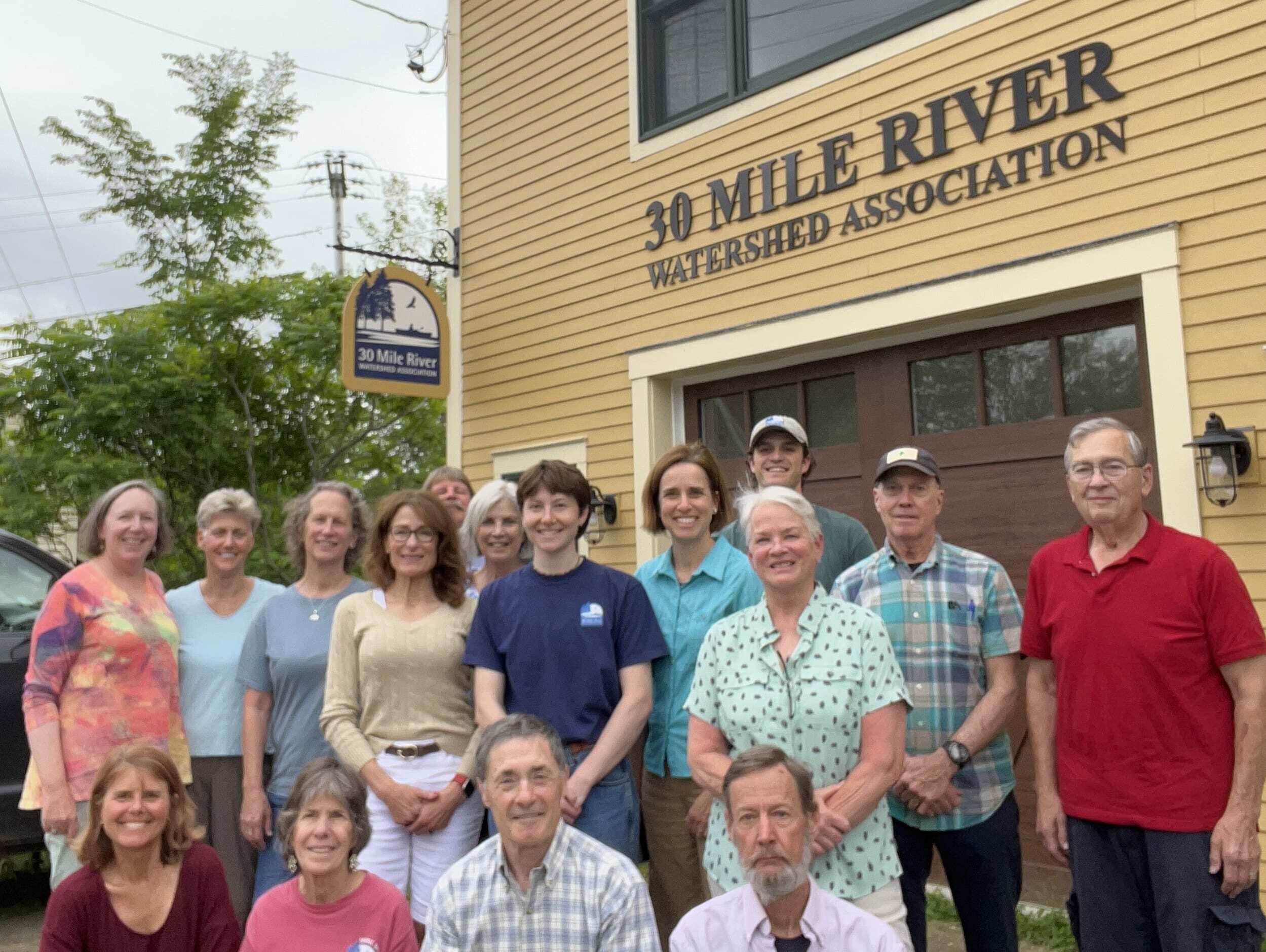
In January 2025 we moved into our newly renovated building in Mt. Vernon village. Throughout the year, we opened our doors to the community and welcomed over 250 visitors during three major events: a summer open house, our first Lake Association Leadership Roundtable, and a holiday open house. These events energized us, brought the space to life, and have us excited for the future!
Come see us at our new location: 6 Seavey Corner Rd in Mount Vernon Village


A Community Effort
It takes a whole community to protect our watershed.
Thank you to our 2025 Volunteers!
Volunteers are a vital part of 30 Mile’s team, generously contributing thousands of hours to make this work possible. They fill key roles across all areas of our work, including boat inspections, water quality monitoring, LakeSmart evaluations, invasive plant surveys, watershed surveys, office support, our Board of Directors, and more.
Volunteers
Volunteer hours
Our Donors
Thank you to ALL of the generous lake lovers who supported 30 Mile in 2025! Your gifts of all sizes demonstrate your commitment to the lakes, ponds, and streams in our watershed. We are grateful for you and the many ways you show up as a community to help care for these precious waters.
Raised from individuals and businesses in 2025 for our Annual Fund
Donors across 15 lakes and ponds
2025 Financial Report

Notes: Grant income of $32,892 was restricted for projects to be completed in 2026.
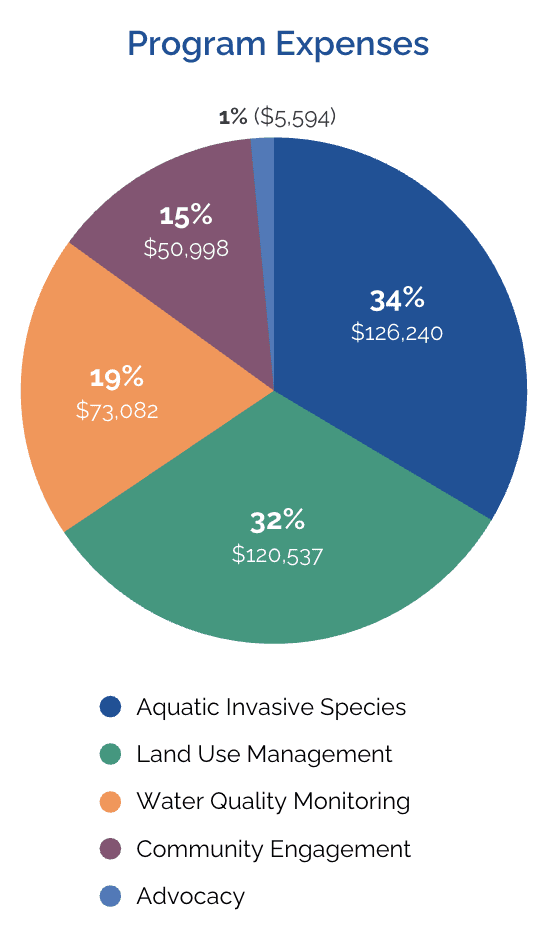
Photo Credit: Flying Pond by Josh Robbins (Banner)