Androscoggin Lake
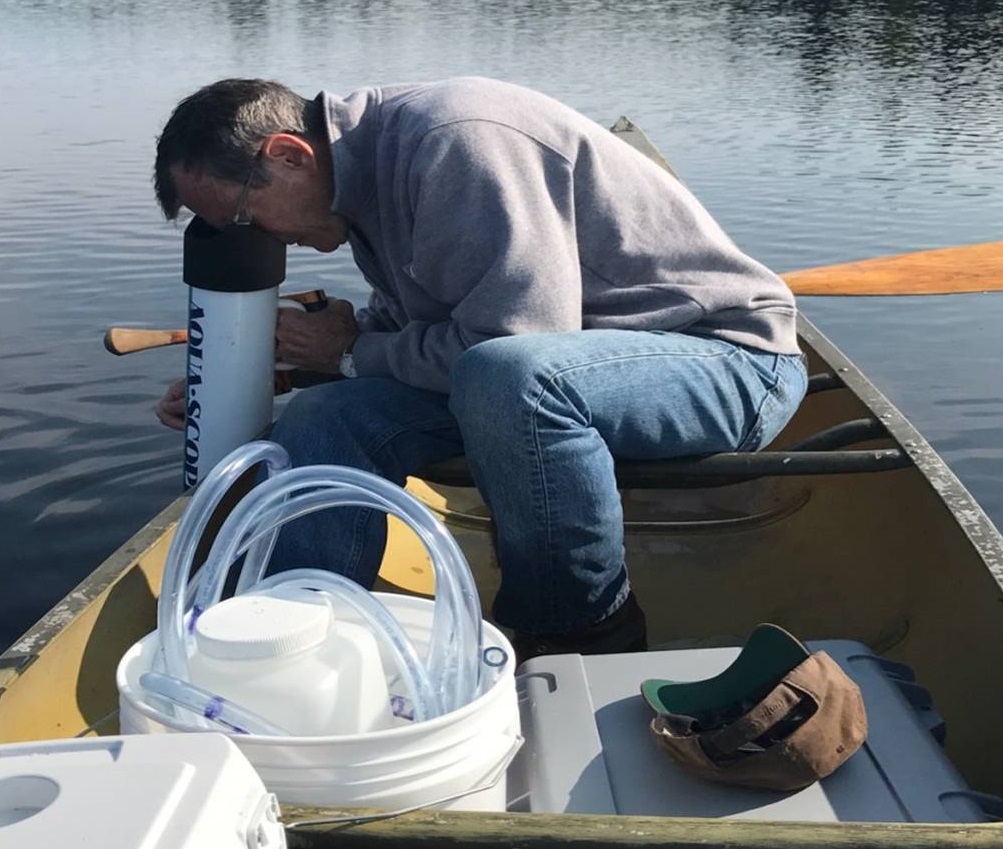
Through our water quality monitoring program, we collect extensive data to track the health of our lakes and ponds. We measure water clarity, temperature, dissolved oxygen, phosphorus and other indicators of water quality. This data helps us identify trends in declining water quality to address at-risk areas before it's too late.
Note: This page updates throughout our monitoring season. Annual water quality reports will be available after the season is completed.
2025 Water Quality Snapshot
Water Quality Monitoring trips
Secchi readings
EC’s & BG’s collected
DO & Temp profiles collected
DEP Lake Scorecard
The new Maine DEP Lake Scorecard is now available! This visual summarizes many types of lake data based on the current conditions and trends of each lake’s health. The major categories include water quality trends, invasive plants, shoreland and habitat, and lake vulnerability. You can click on any section to learn more.
Many of the categories for the lakes and ponds within our watershed have been assessed and scored because of the data 30 Mile staff and volunteers have collected. Our continued collection of data will help to maintain these conditional assessments and further expand our understanding of the health of our lakes and ponds, identify gaps in our data collection, and potentially help prioritize areas to address.
30 Mile staff is in the process of going through each scorecard to look for inaccuracies. If you have any questions or suggestions for improving these pages, you can contact the DEP at MaineDEPLakeScorecard@Maine.gov.

Androscoggin Lake Snapshot
- Town(s): Wayne/Leeds
- Acres: 4020 Acres
- Mean Depth: 15 feet
- Max Depth: 38 feet
- Public Boat Launch: Rt. 133 in Wayne
- Fishery: Androscoggin Lake fishing
- Lake Association: Androscoggin Lake Improvement Corporation
Past Reports
Resources
Water Quality Archive | Depth Map | Algal Bloom Monitoring | Milfoil Project | Watershed Survey (2022) | Watershed-Based Protection Plan
2025 Live Data
Collected by staff and volunteers between May - October
Secchi Depth
Secchi disk transparency (SDT) is an indicator of water clarity. To measure water clarity, a black and white disk is lowered into the water and the reading is taken at the depth at which it is no longer visible. Factors that affect water clarity include algal growth, zooplankton densities, natural water color, and suspended silt or sediment particles. For more information about temperature and dissolved oxygen in lakes and why this information is important, see our water quality monitoring page for more information.
Temperature and Dissolved Oxygen
These readings are obtained as an electronic sensor measures temperature (in degrees Celsius) and dissolved oxygen (in mg/L or ppm) as it is lowered at one meter intervals starting at the surface of the lake. After 15 meters readings are taken every other meter. For more information about temperature and dissolved oxygen in lakes and why this information is important, see our water quality monitoring page for more information.
2025 Temperature readings:
2025 Dissolved Oxygen readings:
2024 Temperature readings:
2024 Dissolved Oxygen readings:
Phosphorus Profile Grab Samples
As part of our advanced water quality data collection on Androscoggin Lake as a response to the recent algal blooms, phosphorus profile grab samples are collected approximately every month. By collecting this data, we can measure the volume- weighted mass of phosphorus in the lake and provide an estimate of how much phosphorus is being internally loaded from bottom sediments each year.
Phosphorus is the nutrient that most influences the growth of algae in lakes. Because its natural occurrence in lakes is very small, phosphorus “limits” the growth of algae in lake ecosystems. Even small increases in phosphorus in lake water can cause substantial increases in algal growth, which hinders not only the overall health of the lake system, but also the economic, recreational, and aesthetic values. Generally speaking, in lake phosphorus concentrations less than 10 ppb are ideal. Lakes with in-lake phosphorus concentrations of ~13 ppb or more are known to sustain algal blooms, and blooms become frequent as average concentrations approach 20 ppb.
Grabs are taken every other meter down through the water column.