Working septic systems are crucial for protecting water quality and preventing pollution. Ignoring maintenance can lead to costly repairs and harm to our lakes and ponds.
Septic systems are underground wastewater treatment structures that keep you, your neighbors and your lake safe from the chemicals, bacteria, viruses and nutrients in your household waste. Maintaining your septic system is relatively easy and inexpensive and will help your system work properly for decades, avoiding replacement costs of $10,000 to $25,000 or more.
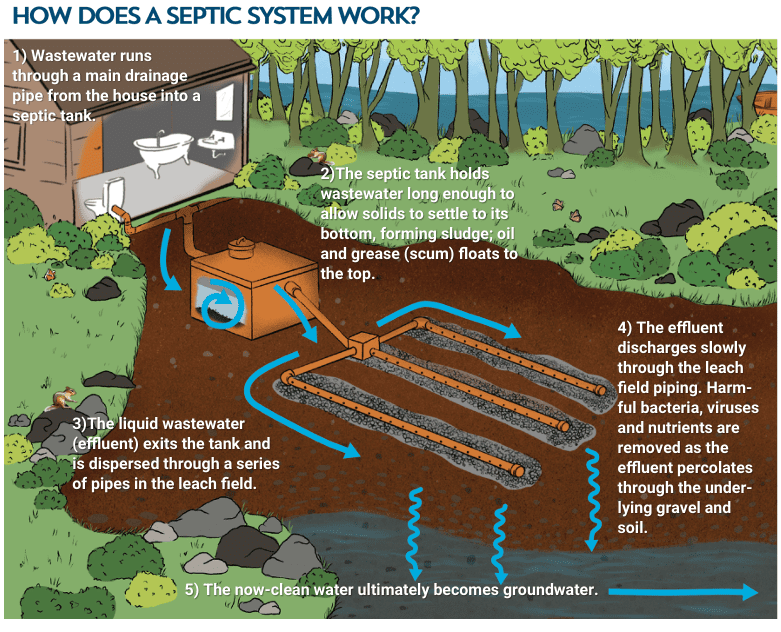
Below are a few items from EPA’s SepticSmart quick tips to follow every day:
Think at the sink
Don’t dispose of fats, oils, or greases down the drain. This can clog your pipes and damage your septic system over time, requiring additional maintenance. Instead, collect waste in an airtight container, and then discard the food waste into the compost or trash bin. Skip the garbage disposal! Homes with garbage disposals average 30% more solids and grease generation than homes without them. Garbage disposals require additional septic tank capacity and/or more frequent pumping.
Protect it and inspect it
Inspections by a certified professional are recommended every 3-5 years for most systems. These inspections determine how well sewage is flowing through the tank and how often it needs to be pumped. They can also check for leaks and other issues during the visit. You can find a certified septic inspector through the Maine DEP list here.
Don’t overload the commode
Human waste and toilet paper are the only things to be flushed! Paper towels, diapers, and baby wipes (even those advertised “flushable”) should never be flushed. Flushing these items can shorten the life of your system. Harsh chemicals from drain cleaners and some cleaning products can also harm your septic system and should be used sparingly.
Pump your tank
How often you pump your tank depends on your system’s capacity. Generally, it is best to pump your system every 3-5 years, but speak with your servicer about what schedule works best for your system and your household needs.
For more information about septic systems and what you can do to protect the lake and your wallet, click here.
To learn more about other work 30 Mile is doing in regards to septic systems, click here.
This article was included in 30 Mile’s January 2026 newsletter. To view the full newsletter, click here.