
When we think of lakes in the winter months, we often picture a barren expanse of ice. It’s easy to think that there isn’t much going on beneath. But for many organisms, this is not the case! Our lake ecosystems don’t come to a halt when lakes ice over. While some processes may slow down, lakes are still teaming with life.
After the fall turnover, ice begins to form at the lake’s surface. Ice is less dense than the water beneath it, keeping it afloat and acting like an insulating blanket. This ice cover reduces the rate of heat loss, keeping lake temperatures relatively stable for the winter, with the warmest water at the lake bottom (if you can call 4°C/39°F warm!). Streams and groundwater continue to flush water, nutrients, and oxygen into lakes, connecting them with their surrounding landscapes.
Sunlight may be limited, but it doesn’t disappear entirely. Light can get through thick ice and even some snowpack. For photosynthetic organisms (those that utilize sunlight to produce energy), production continues, just at a slower rate. Aquatic plants may have winter-specific leaves to aid in energy production, while others rely on energy stored in their roots and specialized structures (rhizomes and tubers).
Other organisms don’t change their productivity much at all, such as diatoms (a type of algae). They feed other organisms, sustaining life throughout the food web including plankton, invertebrates, and eventually, fish! Many cold-water fish remain active throughout the water column, continuing to feed on organisms. Meanwhile, warm-water fish will settle into the lake’s depths to use as little energy as possible. Similarly, frogs and turtles will bury themselves in the mud until spring, using adaptations that allow them to take in oxygen through their skin.
A lake’s productivity in winter can impact it for the rest of the year. Longer, colder winters can help keep summer water temperatures cooler, reducing the risk of harmful algal blooms. Unfortunately, changes in ice-in and ice-out timing are shortening winters, a shift that could contribute to higher summer water temperatures, and more productive algae populations that favor these conditions. While we cannot control the warming temperatures, we can continue to minimize our impact by reducing the amount of nutrients entering lakes, which is the other factor impacting algal blooms.
So while the lakes and ponds in our watershed may look quiet in the winter, beneath the ice they are still active, preparing for the busy seasons ahead. They aren’t asleep, just moving at a slower pace!
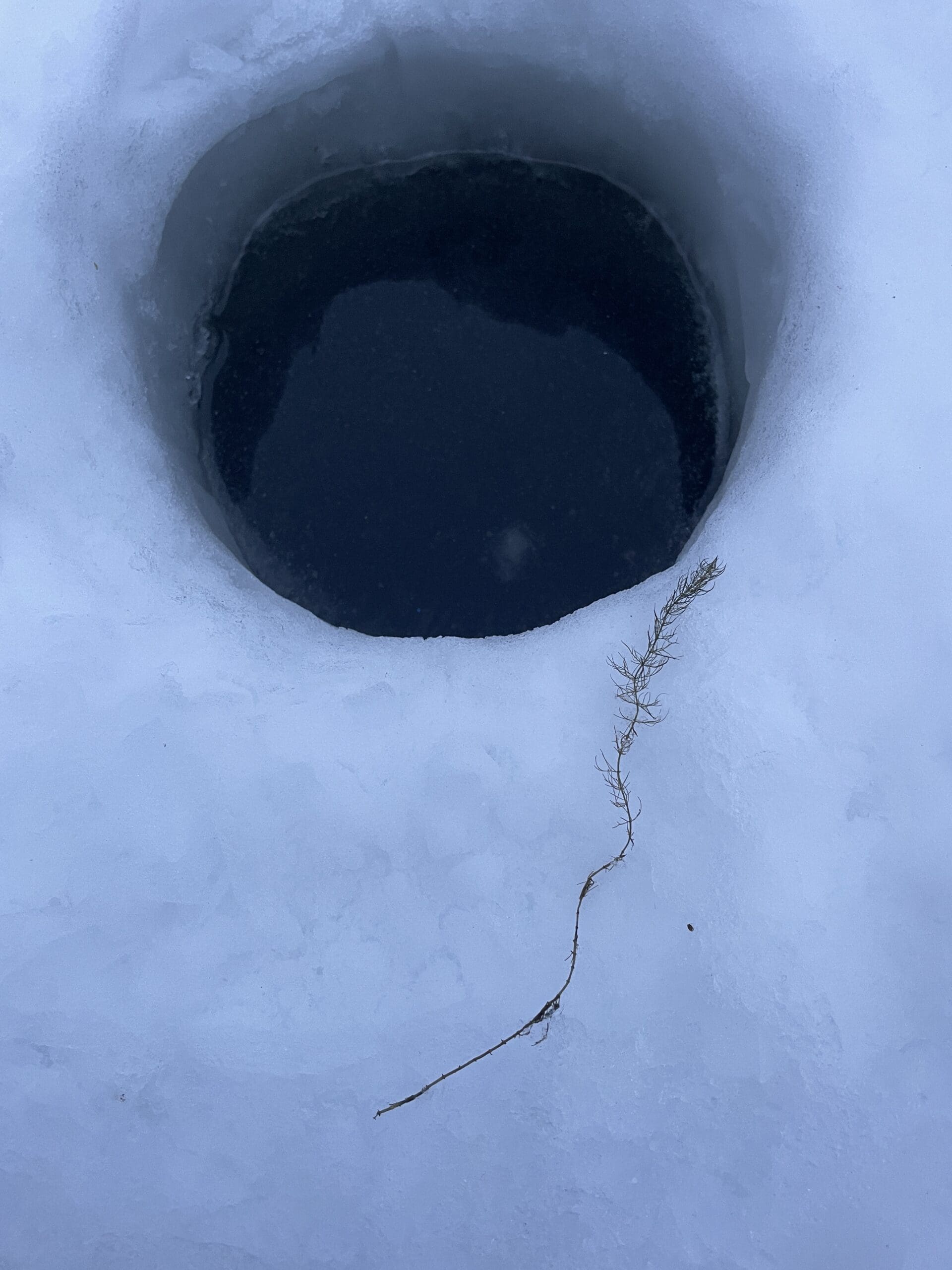
Piece of native milfoil found next to an ice fishing hole on Flying Pond.
This article was included in 30 Mile’s February 2026 newsletter. To view the full release, click here.