30 Mile staff monitor lakes and ponds every two weeks. However, conditions can change rapidly, and it can be helpful to have additional observations of what you are seeing.
Become familiar with what’s commonly found in the water. There are many things that make up a lake’s ecosystem. Sometimes things we see are concerning, but other times they are a natural part of a healthy lake.
Have you seen bubbles, foam, or cotton candy-like clouds? Explore A Field Guide to Aquatic Phenomena and our article “What’s that stuff in the water?” to see if you can identify what you are observing.
Send in photos and questions. We’re here to be a resource for you. If you’d like another set of eyes to help determine if what you’re seeing is typical or not, send photos, locations, and descriptions to sara@30mileriver.org.
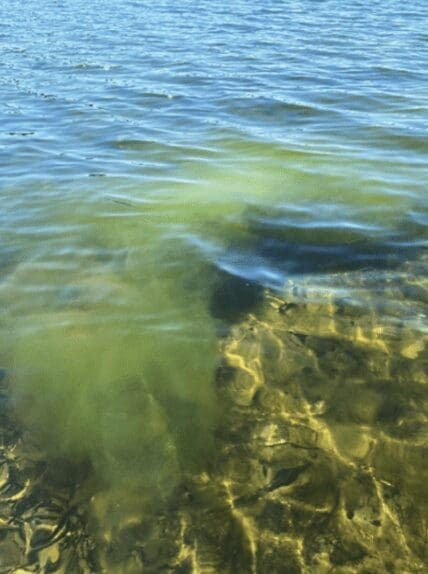
If you suspect a potential algal bloom, contact sara@30mileriver.org and do the following:
- Take photos. Be sure to record the time, date, location, and other observations (smell, size of the algae area, colors, etc.).
- Submit a report. The Maine DEP has a bloom reporting dashboard. You can submit potential blooms for their review here.
- Take a Jar Test. All you need is a clear, pint to quart sized jar to collect a sample of the suspect algae. By letting it sit undisturbed overnight, you can determine if it is possibly cyanobacteria by the way it settles in the jar. Follow the complete instructions here.
Thank you for keeping a close eye on our lakes and ponds. Letting us know what you’re seeing helps us respond quickly and efficiently.
Photo: Metaphyton, a free-floating, filamentous algae by Betsy Clark.
This article was included in 30 Mile’s August 2026 newsletter. To view the full release, click here.