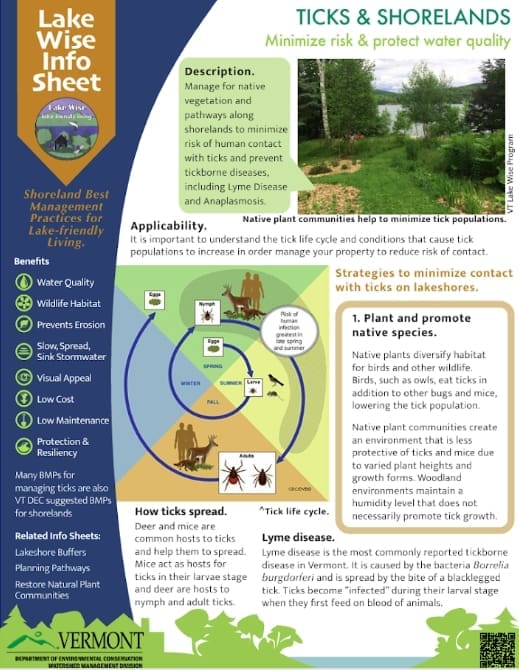
As the climate warms, ticks have become more prevalent in our lives, especially during the late spring and summer when the risk of tick-borne illness peaks.
It is common to want to rake up all the leaves and duff on your property to deter ticks; however, this duff layer is important for holding soil in place and filtering out pollutants. Staying on designated mulched paths leading to the lakefront can minimize opportunities for tick interaction.
By following suggestions from the Androscoggin Valley Soil and Water Conservation District’s Tick and Pest Mitigation workshop summarized below, you can still safely leave the leaves for the benefit of the lake and your landscape, while also managing ticks.
Planting native species in your yard has a number of benefits: providing varied vegetation heights, diversifying habitat for birds and other wildlife, and maintaining a humidity level that does not promote tick growth–all of which also improve the habitat for tick predators. Studies have shown invasive species can create more favorable conditions for ticks to thrive. For example, the invasive Japanese Barberry (Berberis thunbergia) creates the perfect, dense, humid environment for ticks. Replacing invasives with native plants assists in creating a tick-free landscape.
Part of tick prevention and mitigation involves reducing the traffic of common tick hosts across your property. Ticks are often carried by deer, mice, and other animals to the edges of a yard, where the forest or thick underbrush meets a grassy lawn. This boundary is a common place for humans to be exposed to ticks. By planting native species that aren’t a viable food source for deer, you can reduce deer traffic on your property and thus reduce the number of ticks introduced to your nearby surroundings. Additionally, ensure that wood piles and bird feeders are far from your home as they can attract deer and small animals.
Cutting your grass to three inches tall only in areas where you recreate the most, while still maintaining a large vegetative buffer and minimizing the size of your lawn, can assist in tick mitigation. Remember, you are allowed to have one maintained footpath to the lake, no more than 6 ft wide, according to shoreland zoning laws.
As always, ensure you are performing frequent tick checks to prevent developing a tickborne illness such as Lyme Disease or Anaplasmosis.
This article was included in 30 Mile’s July 2026 newsletter. To view the full release, click here.