If you’re thinking about gardening, landscaping, or planting anything new on your shoreline, the best plants to choose are those native to Maine!
Native plants are species that have grown naturally in Maine for thousands of years, long before lawns and ornamental plants became common. Because they evolved here, they’re already adapted to our soils, seasons, and conditions. This usually means less watering, less fertilizing, and less maintenance for you.
It may surprise you that the classic big, bright purple lupines that we associate with June in New England are not native to the area. Many know the children’s story of Miss Rumphius sprinkling lupine seeds throughout the region. This book is based on a true story. It is people’s desire to bring eye-catching or vibrant plants to an area that is unfortunately how many non-native or invasive plants get introduced. These well-known plants are western or big leaf lupine, Lupinus polyphyllus, and in parts of the Midwest and Northeast, are considered invasive. This means that their introduction has caused economic or environmental harm. In some areas, these lupines’ abundance and ability to add nutrients to the soil can significantly increase nitrogen levels beyond what native species can tolerate. As of now, the sale of this plant is not restricted; however, it is included on the Maine DACF Advisory List for its invasive potential.
The sundial or wild lupine (Lupinus perennis) is native to Maine, and also a purple perennial, smaller than its western relatives. They serve as the only larval host plant for the endangered Karner blue butterfly (Lycaeides melissa samuelis), which is locally extinct in Maine, but is the official state butterfly of New Hampshire.
For gardens and landscaping, consider other native plants like New England aster, Joe-pye weed, milkweed, black elderberry, buttonbush, and more that are loved by pollinators like bees and butterflies. Ferns, like the ostrich and sweet fern, add lush texture to shadier spots and require almost no maintenance once established.
Along the shoreline, native plants can improve your buffer and reduce erosion. Their deep, complex root systems hold soil in place and filter runoff before it reaches the water. Shrubs like red-osier dogwood and common buttonbush prefer the soil conditions near the water’s edge.
Replacing part or all of a lawn that runs to the water’s edge with a native buffer is one of the most impactful things a shorefront property owner can do for Maine’s lakes and ponds.
Still not sure where to start? Here is a list of local native plant guides and resources:
- Native Plants for your Shoreland – Maine DEP/ Portland Water District’s three-page guide on choosing the best-fitted plants for your shoreline.
- Maine Native Plant Finder – Maine Audubon: Filter plants based on different criteria (sunlight, soil, size, wildlife benefits) to find the perfect plants for your project.
- Where to Buy Native Plants – Wild Seed Project: Plants and trees listed by where they are available to purchase in the state- seeds are also available to purchase directly from Wild Seed Project.
- Choosing Plants – State of Maine: Quick tips in choosing the right plants, avoiding invasives, and the site provides links to additional resources!
- Maine Gardener Manual – UMaine Cooperative Extension: Garden and Yard– flyers, videos, and books to learn more.
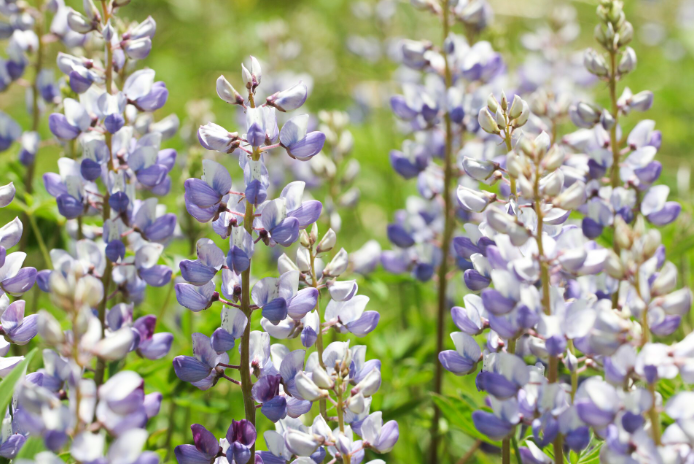
Photo: Wild lupine with its blue-violet flowers is native to North America, yet rare to find in Maine due to habitat loss. PC: plantnative.org.
This article was included in 30 Mile’s May 2026 newsletter. To view the full release, click here.